 The White Pill2d ago
Lost Page Of Archimedes Palimpsest Manuscript Found!
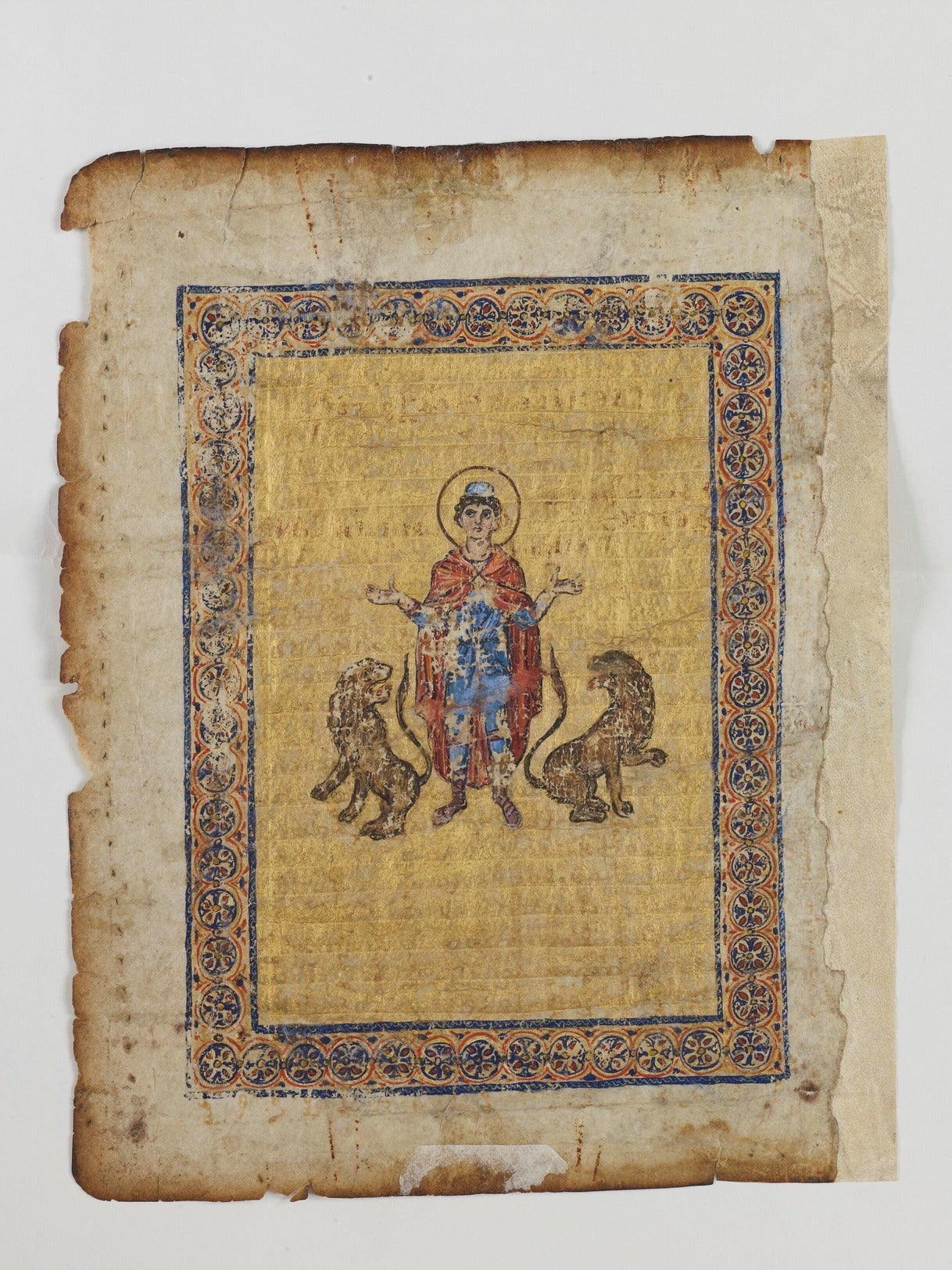
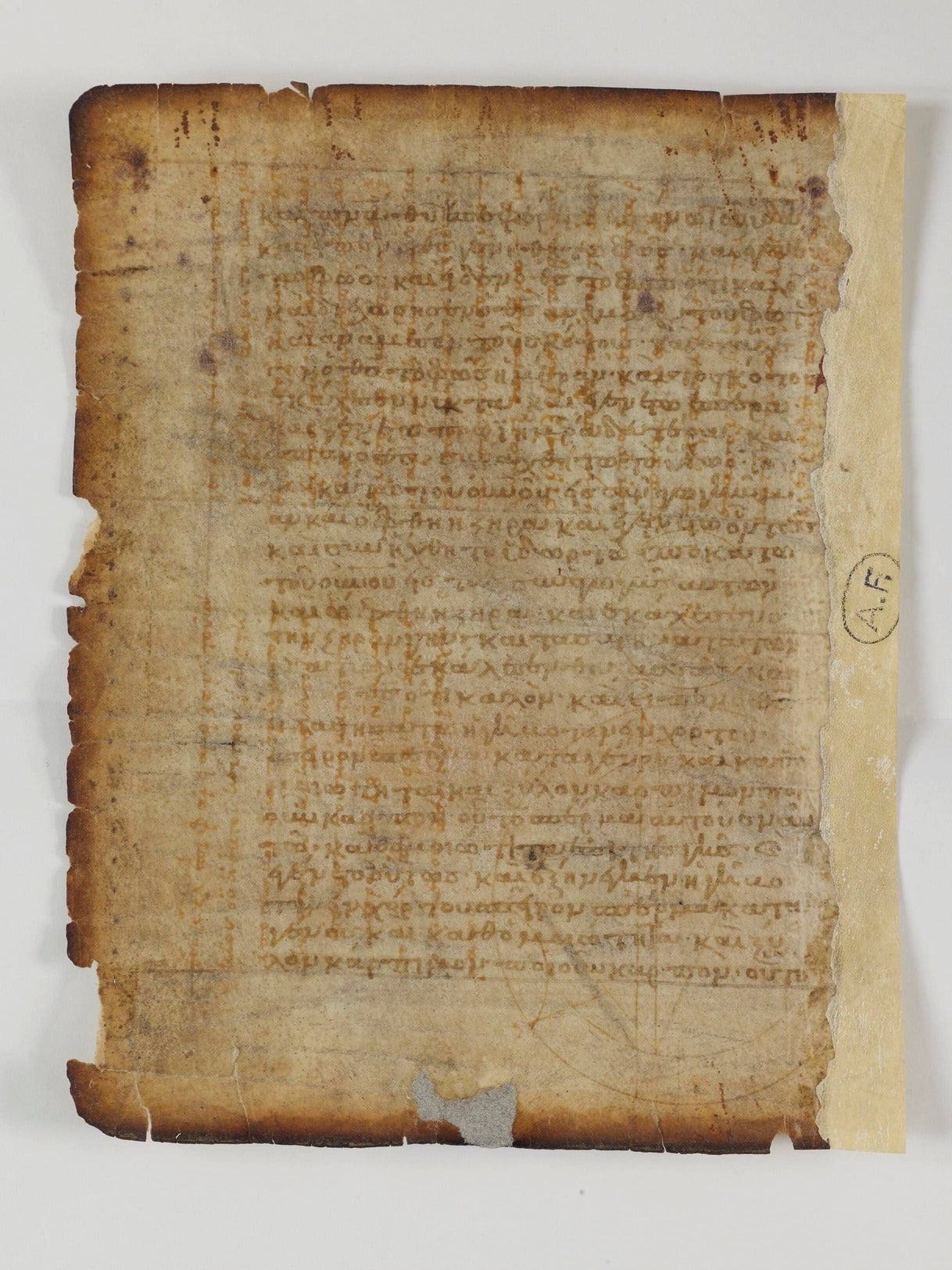
A page long believed to have been lost from the Archimedes Palimpsest, one of the most important surviving manuscripts of antiquity, has been identified at the Musée des Beaux-Arts in Blois, central France, by a CNRS researcher. Initial analysis confirms that the page corresponds to page 123 of the Palimpsest and contains a passage from Archimedes' treatise "On the Sphere and the Cylinder," Book I, Propositions 39 to 41.
The compilation of Archimedes’s writings was created in Constantinople during the mid 9th century. Later, it was smuggled to a monastery in the Judean desert following the sacking of Constantinople by crusaders in 1204.
The writing was scrubbed out by monks in the Middle Ages, in order to reuse the goat-skin parchment for liturgical texts. This practice of reusing parchment was common at the time, due to the animal-skin writing materials being extremely costly.
In 1906, Johan Ludvig Heiberg documented the manuscript through photographs, which are now preserved at the Royal Danish Library. Since then, the manuscript changed hands several times, and as a result, three leaves documented in these photographs disappeared, and have since been considered lost.
By the 1930s, the manuscript was in the possession of an art dealer in Paris, Salomon Guerson. After failing to sell it in 1932, he sought to increase its value by having forged Medieval illustrations added.
In 1998, the Palimpsest was put up for sale at Christie’s by Guerson’s daughter-in-law where it sold for $2 million to the current owner; an anonymous buyer. The buyer lent the manuscript to the Walters Art Museum in Baltimore, Maryland, USA where it currently resides. The anonymous owner funded its research and restoration, as centuries of poor storage led to mold covering portions of the text, and its edges are charred.
In the early 2000s, multispectral imaging made it possible to reveal major texts by Archimedes as well as previously unknown fragments of ancient literary and philosophical works.
The leaf identified by Victor Gysembergh at CNRS was compared with Heiberg's photographs, making it possible to confirm that it was missing leaf number 123.
On one of its two sides, a text of prayers partially covers geometric diagrams and a passage from the treatise "On the Sphere and the Cylinder".
On the other side, the ancient text remains inaccessible using conventional methods of examination, because it is covered by the forged illumination of haloed Prophet Daniel with his palms to the sky and a tamed a pair of lions.
Subject to the necessary authorizations, Gysembergh plans to conduct new imaging campaigns within a year. The new techniques to be used involve a multispectral approach combined with a series of synchrotron-based X-ray fluorescence analyses. This analytical technique can determine the elemental composition of materials in an attempt to reveal the text concealed beneath the illumination.
After this discovery, only two further leaves from the manuscript remain missing.
Archimedes, a Greek mathematician and scientist who laid the foundations of modern calculus, geometry and fundamental physics and lived around 250 B.C.E. in Syracuse, was not available for comment.
💬 1 replies